Beyond the Crisis: How Sustainable Recovery Rebuilds Lives
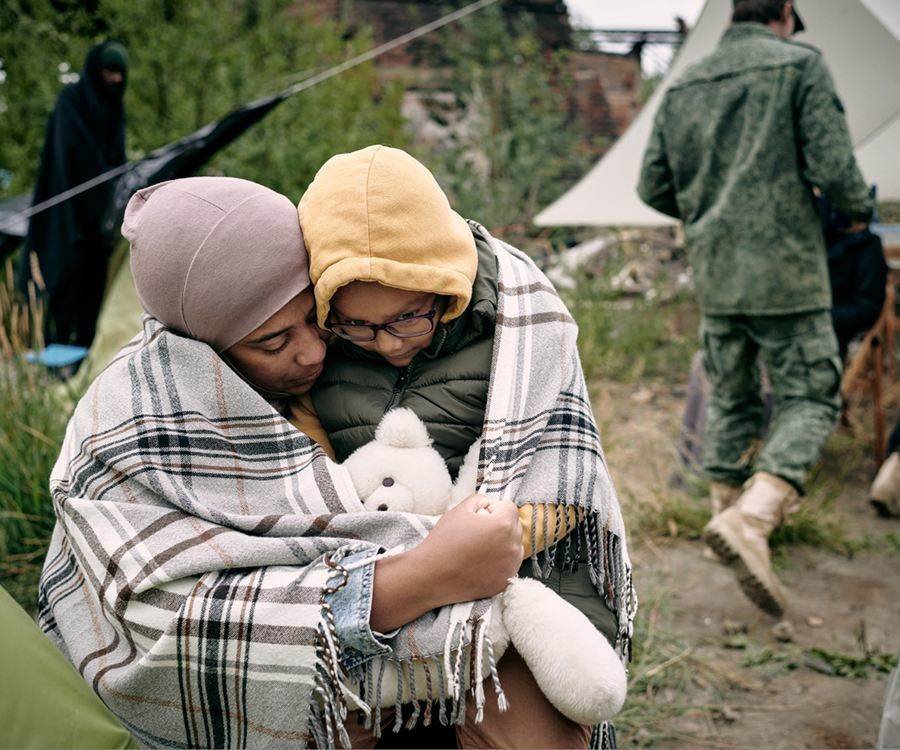
The dust settles. The floodwaters recede. The emergency blankets are folded. For the outside world, the crisis is over. But for the families living through it, the hardest work is just beginning. In the days after disaster, survival dominates every thought. In the months that follow, the question shifts from “How do we stay alive?” to “How do we live again?” At Bridge of Humanity, we’ve learned that emergency relief saves lives—but sustainable recovery rebuilds them. And the difference between the two isn’t just timing. It’s intention.
When headlines fade, so does funding. Yet the path from displacement to dignity rarely fits into a thirty-day response window. A family given a tarp still needs a roof. A child fed today still needs a classroom tomorrow. A mother treated for malnutrition still needs clean water, steady income, and the confidence that next season won’t erase this year’s progress. Short-term aid addresses symptoms. Long-term recovery treats root causes. Without the latter, communities remain trapped in a cycle of dependency, vulnerable to the next shock, the next drought, the next political shift. We’ve seen it too many times: wells dug without maintenance plans, food distributed without nutrition education, shelters built without livelihood pathways. The result isn’t failure—it’s fragmentation. And fragmentation costs lives.
That’s why Bridge of Humanity designs every intervention as a bridge, not a bandage. Our model begins with emergency response—because no one should choose between hunger and dignity when crisis strikes. But within seventy-two hours, our field teams shift from distribution to dialogue. We sit with community elders, women’s cooperatives, youth leaders, and local health workers to map what already exists: indigenous knowledge, informal savings groups, traditional farming techniques, existing social networks. Then we build outward. Clean water projects are paired with sanitation committees and hygiene training. Food security programs include seed banks, climate-resilient crop varieties, and market access support. Maternal health clinics connect to nutrition counseling and income-generation workshops. Recovery isn’t a single program. It’s an ecosystem.
Consider the char communities of Rangpur, where river erosion displaces thousands annually. After providing emergency shelter and medical aid, Bridge of Humanity worked with local leaders to establish floating gardens and elevated homesteads. Women’s groups received training in organic vegetable cultivation and poultry rearing. Within eighteen months, household income stabilized. School dropout rates fell. When the next flood season arrived, families didn’t evacuate in panic—they activated their contingency plans, moved livestock to higher ground, and harvested early. The disaster didn’t disappear. But its power to destroy livelihoods did.
Or take the Rohingya settlements in Cox’s Bazar, where trauma runs as deep as the mud. Beyond distributing rice and blankets, we partnered with community health volunteers to run psychosocial support circles, maternal care networks, and youth skills workshops. Today, those same volunteers lead water committee meetings, teach basic literacy, and mediate neighborhood disputes. Relief gave them breath. Recovery gave them voice.
This approach requires patience. It demands trust. It refuses the quick win in favor of the lasting one. That’s where your partnership becomes essential. When you support Bridge of Humanity, you’re not funding a single meal or a temporary shelter. You’re investing in the infrastructure of hope: the training programs that turn survivors into leaders, the seed libraries that preserve biodiversity, the transparent reporting systems that ensure every taka is tracked, the community funds that keep schools open when harvests fail. Ninety-two percent of your donation flows directly into these integrated programs. The remainder sustains field operations, third-party audits, and adaptive management—because accountability isn’t an afterthought. It’s the foundation.
We also acknowledge the complexities. Climate volatility accelerates. Supply chains fracture. Political landscapes shift. Recovery is rarely linear. That’s why we build feedback loops into every project: monthly community assemblies, real-time monitoring dashboards, and flexible funding reserves that allow us to pivot when conditions change. We publish setbacks alongside successes. We adjust timelines when communities request it. We measure impact not by how fast we leave, but by how well communities thrive after we’re gone.
The world will always face crises. Floods will rise. Conflicts will displace. Droughts will parch. But suffering doesn’t have to be cyclical. When we pair immediate compassion with long-term strategy, when we listen before we act, when we measure success not in tons delivered but in lives transformed, we stop repeating history. We start rewriting it. Recovery isn’t about returning to what was. It’s about building what could be. And it begins with a simple truth: no community should have to survive the rescue only to starve in the aftermath. Together, we can ensure they don’t.

All Categories
Recent Posts
Donation is Hope for Poor Childrens
A Place where Start New Life with Peace